

Brought to you by:
McGill Univ. Libraries and the generosity of Dr. Richard L. Tomlinson
McGill Univ. Libraries and the generosity of Dr. Richard L. Tomlinson
| |
Brought to you by: McGill Univ. Libraries and the generosity of Dr. Richard L. Tomlinson |
|||

|
|
|
| Biochemical
Pharmacology Volume 70, Issue 4, 15 August 2005, Pages 511-519 |
| ||||
|
| ||||

Mechanism of action of a novel “combi-triazene” engineered to possess a polar functional group on the alkylating moiety: Evidence for enhancement of potency
Fouad Brahimia,
Zakaria Rachida,
James P. McNameeb,
Moulay A. Alaoui-Jamalic,
Ana M. Tarid
and Bertrand J. Jean-Claudea,
 ,
, 
Abstract
Previous studies showed that SMA41, a 3-methyltriazene termed “combi-molecules” possessing a dual epidermal growth factor receptor (EGFR)/DNA targeting properties induced potent antiproliferative activity against alkylating-agent-resistant cells expressing EGFR in vitro. However, despite its marked potency, its antitumour activity in vivo was significantly hampered by its poor hydrosolubility and the moderate reactivity of its alkylating moiety. To circumvent this problem, we designed the quinazolinotriazene ZRBA1 to contain a N,N-dimethylaminoethyl group grafted to the 3-position of the triazene chain where it could serve both as a water soluble and a more potent alkylating moiety. ZRBA1 exhibited five-fold stronger EGFR tyrosine kinase (TK) inhibitory activity (IC50 = 37 nM) than SMA41, decomposed into a 6-amino-quinazoline FD105 (IC50 = 200 nM) and preferentially blocked EGF- over platelet-derived growth factor (PDGF)-or serum-induced cell growth. ZRBA1 induced DNA damage, concomitantly blocked EGF-stimulated EGFR phosphorylation by a partially irreversible mechanism in MDA-MB-468 breast cancer cells, and induced partially irreversible antiproliferative activity. It also prevented EGFR-mediated MAP kinase activation and, in contrast to FD105 and SMA41, induced high levels of apoptosis. Furthermore, ZRBA1 showed significantly greater antitumor activity (p < 0.05) than SMA41 in the human MDA-MB-468 breast cancer xenograft model. The results in toto indicate that the appendage of N,N-dimethylaminoethyl to combi-triazenes may be an alternative to the reduced hydrosolubility and also to the lack of potency of monofunctional combi-triazenes against resistant tumours.
Keywords: EGFR signaling; Quinazolines; DNA damage;
Apoptosis; O6-alkylguanine transferase; In vivo efficacy
Article Outline
1. Introduction
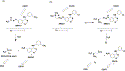
Overexpression of EGFR and its closely related ErbB-2/HER-2 are observed in many human cancers including breast cancer and are correlated with aggressive progression and poor prognosis [1] and [2]. We recently reported a novel tumour-targeting strategy termed the “combi-targeting concept” that sought to combine inhibitors of EGFR TK with DNA damaging agents in order to irreversibly block EGF-dependent tumorigenesis [3], [4], [5], [6] and [7]. The combi-targeting concept postulates that a combi-molecule termed I-TZ (see Fig. 1;where I represents the inhibitory moiety and TZ the DNA damaging species), designed to behave not only as an inhibitor of a TK but also to be hydrolyzed to another EGFR TK inhibitor (I) and a DNA damaging species should induce more sustained antitumour activity than the reversible inhibitor alone. The first I-TZ studied in vivo was SMA41, a methylating agent that showed a rather moderate activity in an A431 carcinoma of the vulva xenograft model [8]. This was imputed to its poor water solubility and perhaps to the lack of sensitivity of A431 cells that expresses O6-alkylguanine transferase (AGT), a DNA repair enzyme capable of removing the methyl group from the O6-methylguanine adduct by transferring it onto its own cystein residue [9]. In an attempt to develop a tandem approach to these limitations, we designed the quinazolinotriazene ZRBA1 to contain a polar N,N-dimethylaminoethyl group on the alkylating moiety. This was designed to form N,N-dimethylaminoethylguanine adducts which were expected to be poor substrates for the AGT compared with O6-methylguanine (Fig. 1). ZRBA1 was designed to tautomerize to a non-conjugated form that can generate N,N-dimethylethyldiazonium upon hydrolytic cleavage (see Fig. 1B). Moreover, in contrast to usual solubilizing strategies in the quinazoline series that is often based on grafting morpholinoalkyl group to the 6- or 7-positions of the quinazoline ring [10], the appendage of the N,N-dimethylaminoethyl group to the alkylating moiety presents the advantage of not increasing the steric bulk of the molecule, a debility that could decrease its affinity for the ATP binding site of EGFR. Here, we studied the mechanism of action of this novel combi-molecule and compared its in vivo activity with that of its methylating counterpart SMA41 using an MDA-MB-468 human breast cancer xenograft model.
Display Full Size version of this image (39K) Fig. 1. Hydrolysis and binary targeting of SMA41 and ZRBA1.
2.1. Drug treatment
FD105, SMA41 and ZRBA1 were synthesized in our laboratory according to published procedures [11], [12] and [7]. Temozolomide (TEM) was provided by Schering-Plough (Kenilworth, NJ). In all assays, drug was dissolved in DMSO and subsequently diluted in RPMI-1640 containing 10% fetal bovine serum (FBS) (Wisent Inc. St.-Bruno, Canada) or in DMEM containing 10% FBS immediately before the treatment of cell cultures. In all assays, the concentration of DMSO never exceeded 0.2% (v/v).
2.2. Cell culture
The human tumour cell lines MDA-MB-468 (breast carcinoma), SF126 and SF188 (glioma) (American Type Culture Collection, Manassas, VA) were maintained in RPMI-1640 supplemented with FBS (10%), antibiotics and HEPES (12.5 mM) (Wisent). The mouse fibroblast cell line NIH3T3, its stable EGFR transfectant NIH3T3HER14, its ErbB2 transfectant NIH3T3neu (generous gifts from Dr. Moulay Aloui-Jamali of the Montreal Jewish General Hospital) and the MDA-MB-453 (American Type Culture Collection, Manassas, VA) were maintained in DMEM supplemented with FBS (10%), antibiotics and HEPES (12.5 mM). All cells were maintained in 5% CO2 atmosphere at 37 °C.
2.3. Solubility and hydrolysis of ZRBA1
The hydrosolubility of ZRBA1 and SMA41 was tested by dissolving the compound in 15 μl DMSO stock solution and dilution in saline buffer (1 ml) at various densities (0.07–0.55 g/l). Solubility concentration was defined as the highest one at which barely detectable precipitation was apparent.
The conversion of ZRBA1 to FD105 was monitored by spectrofluorometer as the latter amine was fluorescent (absorption 270 nm, emission 451 nm). Briefly, 125 μM of ZRBA1 was added to RPMI-1640 with 10% of FBS and incubated for 6 h at 37 °C in a microplate spectrofluorometer. The half-life of ZRBA1 was determined using the non-linear regression, one phase exponential association (SoftMaxPro and Graph pad software).
2.4. Kinase assays
The EGFR kinase assay is similar to the one described previously [4]. Nunc Maxisorp 96-well plates were incubated overnight at 37 °C with 0.25 mg/ml poly (l-glutamic acid–l-tyrosine, 4:1) PGT in PBS. The kinase reaction was performed by using 4.5 ng/well EGFR affinity-purified from A431 cells. The compound was added and phosphorylation initiated by the addition of ATP (50 μM). After 8 min at room temperature, the reaction was terminated by aspiration of the reaction mixture and phosphorylated PGT was detected with HRP-conjugated PY20 anti-phosphotyrosine antibody (Santa Cruz Biotechnology, CA). The signals were developed by the addition of 3,3′,5,5′-tetramethylbenzidine peroxidase substrate and H2SO4 (0.09 M) was added to stop the reaction. The plates were read at 450 nm using a Bio-Rad ELISA reader (model 2550).
2.5. Phosphorylation assay
MDA-MB-468 cells were pre-incubated in a 6-well plates with serum-free media for 18 h, after which they were exposed to the indicated concentrations of ZRBA1 for 2 h and subsequently treated with 100 ng/ml EGF for 10 min. Equal amounts of cell lysates were analyzed by Western blotting using anti-phosphotyrosine antibodies (NeoMarkers, Fremont, CA). The membrane was stripped and reprobed with anti-EGFR antibodies (NeoMarkers).
The reversibility of inhibition was studied as described by Fry et al. [13]. Duplicate sets of cells were treated with 2 μM of designated compound for 2 h. One set of cells was then stimulated with EGF. The other set was washed free of the compound with serum-free media, incubated for 2 h, washed again and then incubated for another 2 h. A final washout was subsequently performed and the cells were further incubated for 4 h. This set of cells was then stimulated with EGF and Western blotting was performed using anti-phosphotyrosine antibodies. The membrane was stripped and reprobed with anti-EGFR antibodies. The inhibition of the extracellular signal-regulated kinase1,2 (Erk1,2) activation by ZRBA1 was performed by Western blotting as described by Tari and Lopez-Berestein [14]. The membrane was incubated with anti-phosphorylated Erk1,2 antibodies (Cell signaling Technology Inc., Beverly, MA), stripped and then reincubated with anti-Erk1,2 antibodies (Cell signaling Technology Inc.). Films were scanned and band intensities were measured using the alphaImager 1220 software package. Values are percentage of control of phosphotyrosine/EGFR or phosphoERK1,2/ERK1,2 for one experiment.
2.6. Growth inhibition studies
To study the effect of ZRBA1 on growth factors stimulated proliferation, cells were grown to approximately 70% of confluence in 48-well plates and washed twice with PBS. The cells were further incubated in serum-free medium for 18 h, after which ZRBA1 and growth factors (EGF, PDGFβ or serum) were added for 72 h.
The antiproliferative effect of ZRBA1 and FD105 in isogenic mouse fibroblast cells NIH3T3, NIH3T3HER14 (NIH3T3 transfected with EGFR gene), NIH3T3neu (NIH3T3 transfected with ErbB2 gene) and in glioma cells SF188 (AGT+), SF126 (AGT−) were studied by growing cells in 96-well plates to approximately 70% of confluence and exposing them to each drug for 72 h in fibroblast and 120 h in glioma.
To study the reversibility of the antiproliferative effect of ZRBA1 and FD105, cells were pre-incubated in 96-well plates to approximately 70% of confluence and exposed to each drug for 2 h, after which they were allowed to recover for 120 h in drug free medium, or continuously for 120 h. All growth inhibitory activities were evaluated using the sulforhodamine B (SRB) assay [15]. Briefly, following drug treatment, cells were fixed using 50 μl of cold trichloroacetic acid (50%) for 60 min at 4 °C, washed five times with tap water and stained for 30 min at room temperature with SRB (0.4%) and dissolved in acetic acid (0.5%). The plates were rinsed five times with 1% acetic acid and allowed to air dry. The resulting colored residue was dissolved in 200 μl of Tris base (10 mM) and optical density read for each well at 450 nm using a Bio-Rad microplate reader (model 2550).
2.7. Alkaline comet assay for quantitation of DNA damage
The modified alkaline comet assay was performed as described previously [16] and [4]. The cells were exposed to a dose range of each drug for 2 h, harvested and resuspended in PBS. Cell suspensions were diluted to approximately 106 cells and mixed with agarose (1%) in PBS at 37 °C in a 1:10 dilution. The gels were cast on Gelbond strips (Mandel Scientific, Canada) using gel-casting chambers and then immediately placed into a lysis buffer [2.5 M NaCl, 0.1 M tetra-sodium EDTA, 10 mM Tris-base and 1% (v/v) Triton X-100, pH 10.0]. After being kept on ice for 30 min, the gels were gently rinsed with distilled water and immersed in a second lysis buffer (2.5 M NaCl, 0.1 M tetrasodium EDTA, 10 mM Tris-base) containing 1 mg/ml proteinase K for 60 min at 37 °C. Thereafter, the gels were rinsed with distilled water, incubated in alkaline electrophoresis buffer for 30 min at 37 °C and electrophoresed at 19 V for 20 min. They were subsequently rinsed with distilled water and placed in 1 M ammonium acetate for 30 min. Thereafter, they were soaked in 100% ethanol for 2 h, dried overnight and stained with SYBR Gold (1/10, 000 dilution of stock supplied from Molecular Probes, Eugene, OR) for 20 min. Comets were visualized at 330× magnification and DNA damage was quantitated using the Tail Moment parameter (i.e., the distance between the barycenter of the head and the tail of the comet multiplied by the percentage of DNA within the tail of the comet). A minimum of 50 cell/comets were analyzed for each sample, using ALKOMET Version 3.1 image analysis software.
2.8. Annexin V binding analysis
Cells were pre-incubated in 6-well plates until confluence and then exposed to a dose range of each drug for 48 h. Thereafter, they were harvested and incubated with annexin V-FITC and propidium iodide (PI) using the apoptosis Detection Kit (BD Bioscience Pharmingen, USA) and the supplier's protocol. Annexin V-FITC and PI binding were analyzed with a Becton-Dickinson FACScan. Data were collected using logarithmic amplification of both the FL1 (FITC) and FL2 (PI) channels. Quadrant analysis of co-ordinate dot plots was performed with CellQuest software.
2.9. In vivo studies
Severe combined immunodeficient (SCID) mice were maintained according to McGill guidelines for the use of laboratory animals. SCID mice housed in filtered cages were implanted subcutaneously (s.c.) with the human breast carcinoma MDA-MB-468 and treatment began when the tumours become palpable (n = 8 mice/group). Each drug (50 mg/kg) was given by intraperitoneal (i.p.) in a solution of aqueous cremophore (25%)/ethanol (25%) (0.2 ml) every 3–4 days for 1 month. The tumour burden was measured with a caliper and mice were weighed twice weekly. Statistical analysis was carried using two-tailed Student's t-test.
3.1. Solubility and hydrolysis of ZRBA1
Solubility testing demonstrated that ZRBA1 could be dissolved at 0.27 g/l, a threshold concentration higher than that of SMA41 that started precipitating at 0.14 g/l.
The conversion of ZRBA1 to its corresponding aminoquinazoline FD105 in serum containing media was confirmed by spectrofluorometry as FD105 was fluorescent (absorption 270 nm, emission 451 nm). The characterization of the released N,N-dimethylethyldiazonium was reported elsewhere [17]. Based upon fluorescence intensity data collected at various time points, the half-life of ZRBA1 in serum-containing media was 108 min (Fig. 2), indicating that ZRBA1 is relatively a stable monoalkyl triazene compared to SMA41 (t1/2 ≈ 30 min) [3].
Display Full Size version of this image (12K) Fig. 2. Formation of free FD105 from ZRBA1. One hundred and twenty-five micro molars of ZRBA1 was added to RPMI-1640 with 10% of FBS and incubated for 6 h at 37 °C in a microplate spectrofluorometer. The half-life of ZRBA1 was determined using the nonlinear regression, one phase exponential association (SoftMaxPro and Graph pad software).
3.2. Inhibition of EGFR TK activity
The assay was performed with a rapid 8-min drug exposure to ensure that the results translate the EGFR TK inhibitory activity of intact ZRBA1. The latter (IC50 = 37 nM) showed more than five-fold greater binding affinity for the EGFR TK ATP site than FD105 (IC50 = 200 nM) in an isolated enzyme assay. More importantly, Western blotting analysis demonstrated that ZRBA1 at 1 μM induced 98% inhibition of EGF-induced EGFR phosphorylation in MDA-MB-468 cells without affecting total EGFR (Fig. 3A).
Display Full Size version of this image (62K) Fig. 3. Inhibition of EGFR phosphorylation and Erk1,2 activation by ZRBA1 in MDA-MB-468. (A) Serum starved cells were pre-incubated for 2 h with the indicated concentrations of ZRBA1 prior to stimulation with EGF for 10 min. Western blotting was performed using anti-phosphotyrosine or anti-EGFR antibodies. (B) Duplicate sets of serum starved cells were treated with 2 μM designated compound for 2 h. One set of cells was then stimulated with EGF. The other set of cells was stimulated with EGF after 8 h post treatment in drug free media and repeated washouts (8 h w). Western blotting was performed as in A. (C) Serum starved cells were treated as in A and Western blotting was performed using anti-phosphorylated Erk1,2 or anti-Erk1,2 antibodies. Band intensities were measured using the alphaImager 1220 software package.
3.3. Mechanism of EGFR inhibition
Unlike FD105, ZRBA1 is a reactive molecule capable of alkylating nucleophiles. Thus, we surmised that it might inflict some covalent damage to the ATP site of EGFR, thereby inducing irreversible receptor inhibition. To test this hypothesis, we used the reversibility assay described by Fry et al. [13] and Smaill et al. [10] and in which cells are treated with drug for 2 h and then washed free of drug. After 8 h, cells were stimulated with EGF for 10 min, lysed and EGFR phosphorylation measured. As expected, ZRBA1 and FD105 at 2 μM completely suppressed EGF-dependent EGFR phosphorylation in MDA-MB-468 cells immediately after drug exposure. However, at 8 h post-treatment in drug-free medium (following repeated washouts), only 42% of the EGFR phosphorylation activity was restored in cells treated with ZRBA1, indicating that this molecule is capable of inducing partially irreversible inhibition of EGFR phosphorylation. In contrast, 93% of EGFR phosphorylation activity was restored in cells treated with FD105 at the same dose (Fig. 3B).
3.4. Inhibition of EGF-dependent signal transduction
We investigated the ability of ZRBA1 to inhibit the phosphorylation of the MAPK ERK1,2, a major signal tranduction pathway activated by EGF [18] and [19]. The results showed that ZRBA1 at 2.5 μM induced complete inhibition of EGF-induced phosphorylation of ERK 1,2 in MDA-MB-468 cells, suggesting that blockage of EGFR phosphorylation by ZRBA1 is associated with inhibition of downstream signalling (Fig. 3C).
3.5. Growth inhibition studies
3.5.1. Inhibition of growth factor-stimulated proliferation
SRB assay demonstrated that ZRBA1 was capable of selectively blocking EGF-stimulated proliferation in NIH3T3 cells stably transfected with the EGFR gene (NIH3T3HER14) over PDGFβ and serum, confirming its receptor-type specificity (Fig. 4A).
Display Full Size version of this image (15K) Fig. 4. (A) Effect of ZRBA1 on growth factors stimulated proliferation in NIH3T3HER14. Cells were exposed to ZRBA1 + growth factors (EGF, PDGFβ or serum) for 72 h. (B) Antiproliferative effect of ZRBA1 in NIH3T3, NIH3T3HER14 and NIH3T3neu. Cells were exposed to each drug for 72 h. Cell growth was measured using SRB assay. Each point represents at least two independent experiments.
3.5.2. Selective growth inhibition
In isogenic cell lines NIH3T3, NIH3T3HER14 and NIH3T3neu, ZRBA1 induced more than 19-fold stronger antiproliferative activity in the EGFR or ErbB2 transfectants compared with their wild type counterpart (Fig. 4B).
3.5.3. Reversibility of growth inhibitory activity
Reversibility studies using growth assays revealed that in contrast to the reversible inhibitor FD105 which lost over 90% of its activity, ZRBA1 significantly retained its effect 5 days after a 2-h exposure in MDA-MB-468 cells, indicating more sustained antiproliferative activity of the latter (Fig. 5A). Similar results were obtained in ErbB2-overexpressing breast carcinoma cell line MDA-MB-453 (data not shown), indicating that ZRBA1 could target other ErbB receptors family.
Display Full Size version of this image (60K) Fig. 5. (A) Reversibility of antiproliferative effect of ZRBA1 and FD105 in MDA-MB-468. Cells were exposed to each drug for 2 h, after which they were allowed to recover for 120 h in drug free medium, or continuously for 120 h. (B) Antiproliferative effect of ZRBA1 and TEM in SF126 and SF188. Cells were exposed to each drug continuously for 120 h. Cell growth was measured using SRB assay. Each point represents at least two independent experiments.
3.5.4. Differential cytotoxicity against AGT+/AGT−Cells
In order to test whether the N,N-dimethylaminoethyl group could confer enhanced cytotoxicity in cells expressing AGT, we studied the differential effects of ZRBA1 on SF188 (AGT+) and SF126 (AGT−), two cells lines that do not express EGFR, in order to avoid complications that could be caused by the influence of EGFR inhibition on the antiproliferative activity. The results showed that TEM, a cyclic triazene was 10-fold more potent against the AGT− cells when compared with the AGT+ cells. In contrast, the differential antiproliferative activity produced by ZRBA1 in the AGT+ and AGT− was eight-fold lower than that induced by TEM (Fig. 5B).
3.6. Induction of DNA damage and apoptosis
Using the alkylating comet assay, we demonstrated that in contrast to FD105 and like SMA41 [3], ZRBA1 was capable of inducing DNA damage in a dose dependent-manner in MDA-MB-468 cells (Fig. 6A).
Display Full Size version of this image (31K) Fig. 6. (A) Quantitation of DNA damage using the alkaline comet assay. Tail moment (i.e., the distance between the barycenter of the head and the tail of the comet multiplied by the percentage of DNA within the tail of the comet) was used as a parameter for the detection of DNA damage in MDA-MB-468 cells exposed to ZRBA1 or FD105 for 2 h. Each point represents at least two independent experiments. (B) Annexin V binding analysis after drug treatment in MDA-MB-468. Cells were untreated or treated with 50 μM FD105 or 50 μM SMA41 or 50 μM ZRBA1 for 48 h. Cells were harvested and incubated with annexin V-FITC and PI as described in Section 2. Annexin V and PI binding were quantitated by flow cytometry.
Annexin V-FITC and PI staining (detected by flow cytometry) were used to distinguish viable (PI−/FITC−), early apoptotic (PI−/FITC+), dead cells by apoptosis (PI+/FITC+) and necrotic (PI+/FITC−) cells. ZRBA1 at 50 μM induced a significant increase in early apoptosis in MDA-MB-468 cells after 48 h drug exposure. In contrast, barely detectable levels of early apoptosis were observed in cells exposed to its daughter inhibitor FD105 and its parent combi-molecule SMA41, indicating that the (N,N-dimethylaminoethyl)triazene moiety has conferred significant cytotoxic properties to ZRBA1 (Fig. 6B).
3.7. In vivo studies
In order to evaluate the contribution of the N,N-dimethylaminoethyl group to in vivo antitumour activity compared to its parent methylating agent SMA41, we used the MDA-MB-468 breast cancer cells that co-express EGFR/AGT and is sensitive to EGFR inhibitors in vivo [20]. As shown in Fig. 7, ZRBA1 at a dose of 50 mg/kg showed significantly superior potency (p < 0.05) against the MDA-MB-468 cells implanted s.c. in SCID mice when compared with its parent combi-molecule SMA41. More importantly, there was no significant weight loss during treatment with ZRBA1 (Fig. 7B).
Display Full Size version of this image (27K) Fig. 7. (A) In vivo efficacy of ZRBA1 and SMA41 against human breast MDA-MB-468 tumours implanted s.c. in SCID mice. Mice were treated when tumours become palpable (n = 8 mice/group). Each drug (50 mg/kg) was given i.p. in a solution of aqueous cremophore (25%)/ethanol (25%) (0.2 ml) every 3–4 days for one month. Results are shown as mean ± S.E.M. tumour volume and statistical analysis was carried using two-tailed Student's t-test, ***p < 0.001 drugs vs. vehicle; *p < 0.05 ZRBA1 vs. SMA41. (B) Variation of body weights of SCID mice treated with ZRBA1 at 50 mg/kg or vehicle alone. Animals were given compounds i.p. and weighed twice weekly over 1 month.
4. Discussion
The combi-targeting concept postulates that the molecules possessing multiple targets should induce greater antitumour activity in refractory tumours than agents with single mechanism of action. To prove this concept, molecules termed combi-molecules were designed to block EGFR (primary target) and to degrade to a DNA damaging agent (secondary target) plus an additional degradation product that retains EGFR TK inhibitory property (the free inhibitor). The first prototype of these combi-molecules, SMA41, was designed to generate a methyl diazonium species plus SMA52 (the free inhibitor). The latter exhibited a rather moderate EGFR TK inhibitory activity (IC50 = 1 μM) [3] and [6]. When administered in vivo, the activity SMA41 was significantly superior to that of the free inhibitor SMA52 (p < 0.05) [8]. Nevertheless, in vivo activity remained moderate and, more importantly, the antiproliferative properties of SMA41 were mitigated by expression of AGT in vitro [6]. Since it was believed that these limitations were due to lack of solubility and lack of potency of the released free inhibitor and the DNA damaging species, ZRBA1 was designed with an N,N-dimethylaminoethyl group grafted to the N3 of 1,2,3-triazene to improve water solubility.
Previous structure–activity relationship studies showed that quinazoline series with 3′-chloro group showed superior potency when compared with the ones with 3′-methyl group as in SMA41 [7] and [12]. Thus, ZRBA1 was synthesized to contain a 3′-chloro group in the quinazoline ring and the N,N-dimethylaminoethyl group at the 6-position of the quinazolines ring. Indeed, as demonstrated by the solubility test, ZRBA1 was significantly more water-soluble than SMA41. Furthermore, it could form a clear solution in an aqueous mixture of cremophore (12.5%)/ethanol (12.5%), the vehicle for in vivo testing. The improved solubility of ZRBA1 may be due to its basic dimethylaminoethyl group that promotes aqueous solvation.
As demonstrated, ZRBA1 (I-TZ) degraded to FD105 (I), a two-fold more potent EGFR TK inhibitor than SMA52, in cell culture media in a manner similar to SMA41 [3]. The release of the methyldiazonium species from SMA41 has already been confirmed by radiotracing [8] and [23] and studies designed to trap the N,N-dimethylethyldiazonium released from ZRBA1 reported elsewhere [17]. ZRBA1 was more stable than the latter combi-molecule with a calculated t1/2 of 108 min, whereas the t1/2 of SMA41 was approximately 30 min [3]. It has already been suggested that the stability of triazenes of the same class as ZRBA1 may be due to their ability to form intramolecular hydrogen bonding (see Fig. 1B) that stabilizes the conjugated tautomer. More importantly, the formation of FD105 seems to play a role in the overall activity of ZRBA1, since significant activity (p < 0.05) was lost when the drug was washed out after a 2 h exposure. Thus, the released FD105 may maintain the EGFR inhibitory activity thereby, potentiating DNA damage induction. Furthermore, ZRBA1 exhibited selectivity for EGFR in growth factor-stimulated proliferation, a property that it awes to its strong EGFR TK inhibitory potency combined with that of its inhibitory metabolite.
ZRBA1 showed marked binary targeting properties: (a) it could simultaneously block EGFR phosphorylation and subsequent activation of Erk1,2 and (b) induce DNA damage. This dual effect translated into significant levels of apoptosis in the MDA-MB-468 cells. Induction of apoptosis by ZRBA1 may not solely be due to its ability to block EGFR TK, since FD105, a reversible inhibitor of EGFR, could not induce apoptosis in those cells over the entire dose range. Its proapoptotic potency may be due to its ability to induce DNA lesions with simultaneous inhibition of EGF-induced activation of anti-apoptotic signaling. Apoptosis induced by EGFR inhibitors have already been associated with decreased phosphorylation of the serine-threonine kinase Akt [21] and [22]. However, since ZRBA1 can damage DNA, apoptotic signaling may also be induced through the stress response pathway leading to multiple pathways through which apoptosis could be triggered by the combi-molecule.
Interestingly, the marked cytotoxic property of the combi-molecule ZRBA1 translated into significantly superior potency (p < 0.05) when compared with the methylating combi-molecules SMA41 in the AGT-expressing MDA-MB-468 [6] xenograft model. The marked potency of ZRBA1 in this model may be attributed to its hydrosolubility and more importantly to its ability to induce DNA adducts that are perhaps less susceptible to AGT repair than the O6-methylguanine adducts induced by SMA41. As mentioned previously, because of its marked chemical difference when compared with the methyl group, the N,N-dimethylaminoethyl group was expected to confer a much lesser differential cytotoxicity profile in AGT+/AGT− cells than the methyl group. Indeed, SMA41 [6] and TEM produced eight-fold greater differential cytotoxicity in AGT+/AGT− cells than ZRBA1, indicating that DNA lesions induced by ZRBA1 may be less sensitive to repair by AGT than those produced by SMA41.
In summary, the combi-molecular strategy involving an EGFR inhibitory
mechanism and DNA damage by the N,N-dimethylaminoethyl alkylating
moiety may well represent a novel approach for enhancing the potency of
monofunctional alkylating combi-molecules of the triazene class.
Acknowledgment
We thank the National Cancer Institute of Canada (NCIC) for financial support (Grant #: 013377).
References
[1] P.G. Koenders, L.V. Beex, A. Guerts-Moespat, J.J. Heuvel, C.B. Kienhuis and T.J. Benraad, Epidermal growth factor receptor-negative tumours are predominantly confined to the subgroup of estradiol receptor-positive human primary breast cancers, Cancer Res 51 (1991), pp. 4544–4548. View Record in Scopus | Cited By in Scopus (39)
[2] D.J. Slamon, W. Godolphin and L.A. Jones et al., Studies of the HER-2/neu proto-oncogene in human breast and ovarian cancer, Science 244 (1989), pp. 707–712. View Record in Scopus | Cited By in Scopus (2366)
[3] S.L. Matheson, J.P. McNamee and B.J. Jean-Claude, Design of a chimeric 3-methyl-1,2,3-triazene with mixed receptor tyrosine kinase and DNA damaging properties: a novel tumour targeting strategy, J Pharm Exp Ther 296 (2001), pp. 832–840. View Record in Scopus | Cited By in Scopus (29)
[4] F. Brahimi, S.L. Matheson, J.P. McNamee, A. Tari and B.J. Jean-Claude, Inhibition of epidermal growth factor receptor-mediated signaling by “combi-triazene” BJ2000, a new probe for the Combi-Targeting postulates, J Pharm Exp Ther 303 (2002), pp. 238–246. Full Text via CrossRef | View Record in Scopus | Cited By in Scopus (22)
[5] Q. Qiu, F. Dudouit, S.L. Matheson, F. Brahimi, R. Banerjee and J.P. Mcnamee et al., The combi-targeting concept: a novel 3,3-disubstitued nitrosourea with EGFR tyrosine kinase inhibitory properties, Cancer Chemother Pharmacol 51 (2003), pp. 1–10. Full Text via CrossRef | View Record in Scopus | Cited By in Scopus (19)
[6] S.L. Matheson, J.P. McNamee and B.J. Jean-Claude, Differential responses of EGFRE/AGT-expressing cells to the “combi-tirazene” SMA41, Cancer Chemother Pharmacol 51 (2003), pp. 11–20. Full Text via CrossRef | View Record in Scopus | Cited By in Scopus (19)
[7] Z. Rachid, F. Brahimi, N. Teoh, A. Katsoulas and B.J. Jean-Claude, Chemical dissection of the binary properties of a series of combi-triazenes, J Med Chem 46 (2003), pp. 4313–4321. Full Text via CrossRef | View Record in Scopus | Cited By in Scopus (12)
[8] S.L. Matheson, J.P. McNamee, T. Wang, M.A. Alaoui-Jamali and B.J. Jean-Claude, The combi-targeting concept: dissection of the binary mechanism of action of the combi-tiazene SMA41 in vitro and antitumour activity in vivo, J Pharm Exp Ther 311 (2004), pp. 1163–1170. Full Text via CrossRef | View Record in Scopus | Cited By in Scopus (4)
[9] A.J. Fornace Jr., M.A. Papathanasiou, M.C. Hollander and D.B. Yarosh, Expression of the O6-methylguanine-DNA methyltransferase gene MGMT in MER+ and MER− human tumor cells, Cancer Res 50 (1990), pp. 7908–7911. View Record in Scopus | Cited By in Scopus (30)
[10] J.B. Smaill, G.W. Rewcastle, J.A. Loo, K.D. Greis, O.H. Chan and E.L. Reyner et al., Tyrosine kinase inhibitors. 17. Irreversible inhibitors of the epidermal growth factor receptor: 4-(phenylamino)quinazoline- and 4-(phenylamino)pyrido[3,2-d]pyrimidine-6-acrylamides bearing additional solubilizing functions, J Med Chem 43 (2000), pp. 1380–1397. Full Text via CrossRef | View Record in Scopus | Cited By in Scopus (112)
[11] H.W. Manning, L.M. Cameron, R.J. LaFrance, K. Vaughan and R. Rajaman, Triazene metabolism. V. Chemical and biological properties of N,N-bis-[1-aryl-3-methyltriazen-3-yl)-methyl]-methylamines: potential prodrugs for the cytotoxic monomethyltriazenes, Anti-Cancer Drug Des 1 (1985), pp. 37–43. View Record in Scopus | Cited By in Scopus (11)
[12] G.W. Rewcastle, W.A. Denny, A.J. Bridges, H. Zhou, D.R. Cody and A. McMichael et al., Tyrosine kinase inhibitors. 5. Synthesis and structure-activity relationships for 4-[(phenylmethyl)amino]- and 4-(phenylamino)quinazolines as potent adenosine 5′-triphosphate binding site inhibitors of the tyrosine kinase domain of the epidermal growth factor receptor, J Med Chem 38 (1995), pp. 3482–3487. Full Text via CrossRef | View Record in Scopus | Cited By in Scopus (125)
[13] D.W. Fry, A.J. Bridges, W.A. Denny, A. Doherty, K.D. Greis and J.L. Hicks et al., Specific irreversible inactivation of the epidermal growth factor receptor and ErbB2, by a new class of tyrosine kinase inhibitor, Proc Natl Acad Sci 95 (1998), pp. 12022–12027. Full Text via CrossRef | View Record in Scopus | Cited By in Scopus (187)
[14] A.M. Tari and G. Lopez-Berestein, Serum predominantly activates MAPK and Akt kinases in EGFR- and ErbB2-overexpressing cells, respectively, Int J Cancer 86 (2000), pp. 295–297. Full Text via CrossRef | View Record in Scopus | Cited By in Scopus (22)
[15] P. Skehan, R. Storeng, D. Scudiero, A. Monks, J. McMahon and D. Vistica et al., New colorimetric cytotoxicity assay for anti-cancer drug screening, J Natl Cancer Inst 82 (1990), pp. 1107–1112. View Record in Scopus | Cited By in Scopus (2281)
[16] J.P. McNamee, J.R. Mclean, C.L. Ferrarotto and P.V. Bellier, Comet assay: rapid processing of multiple samples, Mutat. Res 466 (2000), pp. 63–69. SummaryPlus | Full Text + Links | PDF (147 K) | View Record in Scopus | Cited By in Scopus (39)
[17] Merayo N, Rachid Z, Brahimi F, Jean-Claude BJ. The combi-targeting concept: evidence for the formation of new metabolites. Cancer Lett, submitted for publication.
[18] R.J. Davis, The mitogen-activated protein kinase signal transduction pathway, J Biol Chem 268 (1993), pp. 14553–14556. View Record in Scopus | Cited By in Scopus (1380)
[19] M.A. Olayioye, R.M. Neve, H.A. Lane and N.E. Hynes, The ErbB signaling network: receptor heterodimerization in development and cancer, EMBO J 19 (2000), pp. 3159–3167. Full Text via CrossRef | View Record in Scopus | Cited By in Scopus (675)
[20] H. Modjtahedi, S. Eccles, G. Box, J. Styles and C. Dean, Immunotherapy of human tumour xenografts overexpressing the EGF receptor with rat antibodies that block growth factor-receptor interaction, Br J Cancer 67 (1993), pp. 254–261. View Record in Scopus | Cited By in Scopus (48)
[21] S.Y. Park and D.W. Seol, Regulation of Akt by EGF-R inhibitors, a possible mechanism of EGF-R inhibitor-enhanced TRAIL-induced apoptosis, Biochem Biophys Res Commun 295 (2002), pp. 515–518. SummaryPlus | Full Text + Links | PDF (137 K) | View Record in Scopus | Cited By in Scopus (15)
[22] S. Huang, E.A. Armstrong, S. Benavente, P. Chinnaiyan and P.M. Harari, Dual-agent molecular targeting of the epidermal growth factor recptor (EGFR): combining anti-EGFR antibody with tyrosine kinase inhibitor, Cancer Res 64 (2004), pp. 5355–5362. Full Text via CrossRef | View Record in Scopus | Cited By in Scopus (120)
[23]
Matheson SL, Brahimi F., Jean-Claude BJ. The combi-tarteting concept:
intracellular fragmentation of the binary epidermal growth factor (EGFR)/DNA
targeting “combi-triazene” SMA41. Biochem Pharmacol 2004;67:1131–38.
| Biochemical
Pharmacology Volume 70, Issue 4, 15 August 2005, Pages 511-519 |
|
|
 |







.gif "Display Full Size version of this image (12K) - Opens new window")
.gif "Display Full Size version of this image (62K) - Opens new window")
.gif "Display Full Size version of this image (15K) - Opens new window")
.gif "Display Full Size version of this image (60K) - Opens new window")
.gif "Display Full Size version of this image (31K) - Opens new window")
.gif "Display Full Size version of this image (27K) - Opens new window")
